Here is another item I’d like to write about today. This is a typical traditional Malian stool. Like the small cooking stoves, these are also found in every compound here. The women work low to the ground, near the children. They are experts at squatting and bending and doing their work down low. You won’t find such a thing as a table and chairs for eating in a traditional Malian compound. Kitchens are outdoors. There are no countertops or sinks to work at. The women here sit low, squat or bend to do their work.
Here are a few pictures from villages with these little stools. I think they have a lot of personality. I have one at home, in Utah, to remind me of the incredible women here and how hard they work to provide for their families, especially in their outdoor kitchens.
Most compounds in Mali have these traditional cooking stoves for preparing meals. They come in different shapes and sizes, but most are small and hold one pot. Some stoves are particularly used for making tea, which is a popular drink here, prepared several times a day. Men often are the tea makers, sitting in the shade on hot afternoons, overseeing the teapots on these small stoves.
These stoves are heated with charcoal, which is made from wood cut and burned in more rural areas. These coal farms are as hot as hades. After cooling, the charcoal is bagged and brought into town where vendors put it into smaller sacks for sale.
Most cooking is done outdoors here and compound kitchens usually have several of these stoves for cooking the family meals.
These wire pads for sale here are used in the stoves to save charcoal and heat.
Here are some pictures I took a couple of months ago in Ouelessebougou at the refugee camp where the people are making charcoal to sell.
I love these ingenious children at play. I’m always on the lookout for the things they make with their own minds and hands to entertain themselves. This one is a winner! Like boys all over the world, the boys here love wheels and things that go and they dream of driving.
This one is build with a motorcycle tire and spokes from sticks decorated with plastic soda bottles. The steering column makes for fun driving.
Watch it go!
Here are some others boys driving their wheels today!
We had a small group today in Binabougou. It takes us about an hour by taxi to get there from Bamako. Transport is a big challenge here. In Binabougou only a few live close enough to the school to walk. It’s hard for people to come when they have no money for transport.
Waiting and hoping for our friends to arrive.
We ended up having a very nice sacrament meeting with Frere Chiaka and Julien, joined later by Chiaka’s son and his friends. Julien blessed the sacrament for the very first time, and each of us gave talks afterwards. We talked about the promises and blessings in the sacrament prayers and what it means to renew those promises each week.
For the second hour, we found a working outlet in the school director’s office where we could plug in the laptop to share a general conference talk with this little group. We listened to our Congolese general authority, Elder Mutombo’s wonderful talk about his family’s conversion.
I feel like we are planting seeds here. In time, they will grow and flourish.
Here is a new local fruit! It’s called Zamba. I was asking these neighbors about this fruit when a boy came by on his bike to buy one. I was curious to see what was inside.
With his thumb, he scooped out the orange-colored fruit inside into a small plastic sack. The lady added 2 spoons of sugar and he mushed it all up, then ate it from the sack.
I never tire of watching children play, especially when they invent or build their own fun. These boys live right by the church and they were having a lot of fun here this afternoon!
This afternoon we went to visit dear Valerie, our Relief Society President. She gave birth to a son named Jamie on April 5th. We’ve been looking forward to meeting this newest member of our Bamako Branch.
One of the things we did today was to talk about Days for Girls. Valerie will study the flipchart and instructions so we can teach the women and girls in our branch and groups. It’s time to share this gift with them!
Here is this whole wonderful family: Valerie and Biggo and sons Mike and Jamie. We love them so much.
We also got to meet Chantal, Valerie’s neighbor and friend who is listening to the missionary lessons with the Elders. She was delightful.
A baby is a great blessing. A blessing of joy and hope.
I hope these names and faces are recorded in heaven, these friends who come to help clean the church every Saturday. I will document them here and say Thank You for your service.
Preparing a building for the Sabbath each week is no small thing. Dust flies freely here and it lands everywhere. It takes all morning to sweep it up and mop the floors so we can feel peace here on Sunday.
Here’s our cleaning crew today: Ibrahima Togola, Sekou Dembele, Elder Koffi, Ann & John Lewis and Fr. Mbaya. Thank you. We love you.
A bad thing happened. It started with a mosquito hovering in front of my computer screen. I could see the mosquito had my blood in her belly. I could feel her bite on my leg. I watched her land on the upper right edge of my screen, and then, from a few inches away, I flicked her to her death.
The instant I flicked her (and the edge of my screen) something bad happened. My screen started to fritz, flicker and flash. I feeling of dread filled me. I turned off my laptop and turned it back on. Three times. The flashing continued. It gave me a headache after 5 minutes. I went to bed, praying for my laptop. I woke the next morning, praying for a miracle to fix the problem. There was none. Seeing my distress, John looked online for clues of what to do to solve this problem.
He tried every diagnostic he could find. The last resort was to open the laptop and look for “something loose and tighten it.” There are 10 tiny screws holding my laptop together. We have a normal-sized screwdriver here that I use to pry coconut out of the shell. That’s all.
So we went on a quest to find a tiny screwdriver with a flower head in our local hardware stores. It was asking a lot.
This is our best go-to hardware store. We visited several, but this was our best chance stop.
Would they have a tiny flower-headed screwdriver made for opening laptops? You’re right. No.
I was sad. John was sad. He so badly wanted to find a way to fix my laptop and make me happy. I felt as sad as these sheep on their way to the slaughter.
Only the color of these mangoes cheered me a bit as we made our way back home.
For four days I lived without my laptop. I pulled out an old dinosaur laptop we brought with us just in case we ever needed a back up. I was able to write there, but not post photos and all the things I love to do. I was so sad.
We called our friend, Anounou yesterday and asked if he knew where we might find a tiny screwdriver. This morning he dropped by 2 screwdriver sets, one large, one tiny. This evening when we got home, John tried again to open my laptop. I prayed. The smallest screwdriver in the set (a flathead) seemed to fit into the screws. One by one, John was able to loosen them, until he got to the last one, #9. It was stripped. I prayed. It finally came loose and he opened the bottom side of the keyboard.
Nothing looked loose. He ran his fingers over the wires and parts and pieces. I prayed. Everything (as much as we could tell) looked in order. After about 5 minutes of touching things, he tried turning the laptop on. I prayed. The screen lit up. There was no flashing. It was calm. It was correct. Oh my word, he fixed it!! I am praying again, my thanks for the miracle of healing and for the miracle of being able to write and post again. I am so very very grateful.
In Africa, there have been more deaths from malaria than from coronavirus in the past year.
This sad fact isn’t just a sudden pandemic like COVID-19. It’s a fact of life here in Africa, especially in Sub-Sahara Africa where we live. Many of us who have lived here have survived having malaria, but many do not, especially the little children.
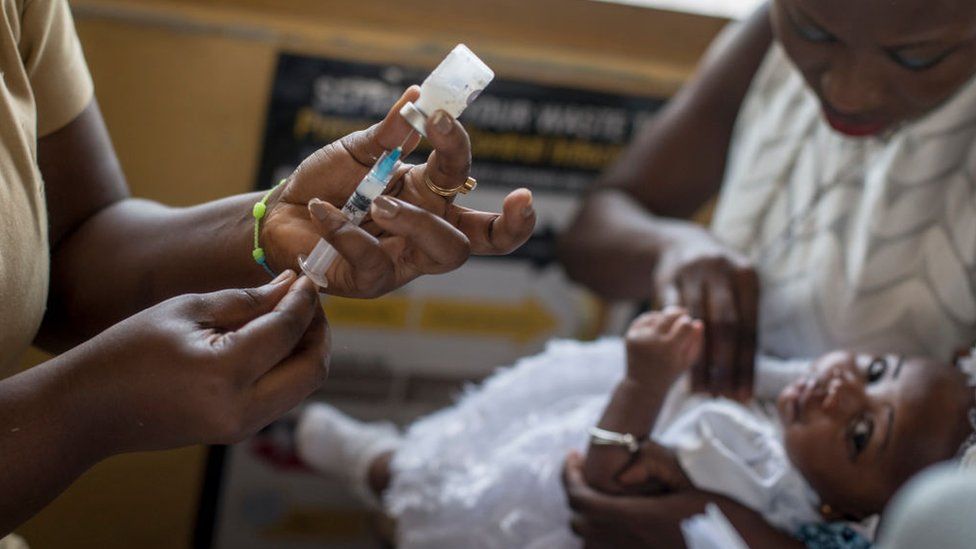
This week, I was thrilled to see the article below about the breakthroughs that have happened in malaria research this year, many thanks to more focused research on finding a vaccination for COVID-19. Good things are happening in our world during these trying times.
Malaria vaccine hailed as potential breakthrough
By Philippa Roxby
Health reporter, BBC, 23 April 2021
A malaria vaccine has proved to be 77% effective in early trials and could be a major breakthrough against the disease, says the University of Oxford team behind it.
Malaria kills more than 400,000 people a year, mostly children in sub-Saharan Africa.
But despite many vaccines being trialled over the years, this is the first to meet the required target. The researchers say this vaccine could have a major public health impact.
Larger trials in nearly 5,000 children between the ages of five months and three years will now be carried out across four African countries to confirm the findings.
Malaria is a life-threatening disease caused by parasites that are transmitted to people through mosquito bites. Although preventable and curable, the World Health Organization estimates there were 229 million cases worldwide in 2019 and 409,000 deaths.
The illness starts with symptoms such as fever, headaches and chills and, without treatment, can progress quickly to severe illness and often death.
‘Major health impact’
Study author Adrian Hill, director of the Jenner Institute and professor of vaccinology at the University of Oxford, said he believed the vaccine was the first to reach the World Health Organization’s goal of at least 75% efficacy.
The most effective malaria vaccine to date had only shown 55% efficacy in trials on African children.
IMAGE COPYRIGHTGETTY IMAGES
The trials of this malaria vaccine started in 2019, long before coronavirus appeared – and the Oxford team developed its Covid vaccine (with AstraZeneca) on the strength of its research into malaria, Prof Hill said.
A malaria vaccine has taken much longer to come to fruition because there are thousands of genes in malaria compared to around a dozen in coronavirus, and a very high immune response is needed to fight off the disease.
“That’s a real technical challenge,” Prof Hill said. “The vast majority of vaccines haven’t worked because it’s very difficult.”
However, he said the trial results meant the vaccine was “very deployable” and “has the potential to have a major public health impact”.
‘Tool for saving lives’
In a pre-print study with The Lancet, the research team – from Oxford, Nanoro in Burkina Faso and the US – reported the trial results of R21/Matrix-M, after testing a low and high dose of the vaccine in children, between May and August, before peak malaria season.
The vaccine showed 77% efficacy in the higher-dose group and 71% in the lower-dose group.
Halidou Tinto, professor in parasitology and the principal trial investigator at the Clinical Research Unit of Nanoro, Burkina Faso, said the results were “very exciting” and showed “unprecedented efficacy levels”.
“We look forward to the upcoming ‘phase III’ trial to demonstrate large-scale safety and efficacy data for a vaccine that is greatly needed in this region.”
In Africa, there have been more deaths from malaria than from coronavirus in the past year.
The Serum Institute of India, which has manufactured the vaccine, says it is confident of delivering more than 200 million doses of the vaccine as soon as it is approved by regulators.
Biotechnology company Novavax provided the adjuvant for the vaccine, an ingredient which is used to create a stronger immune response.
Malaria is one of the leading causes of childhood mortality in Africa and Prof Charlemagne Ouédraogo, minister of health in Burkina Faso, said the new data showed that a new malaria vaccine could be licensed “in the coming years”.
“That would be an extremely important new tool for controlling malaria and saving many lives,” he said.


 Our Cote d’Ivoire Abidjan East and Bamako, Mali Mission